02 // Photonic Substrates — Polymer-V and Substrate-X
THE MATERIAL THAT MAKES THE CODEX POSSIBLE
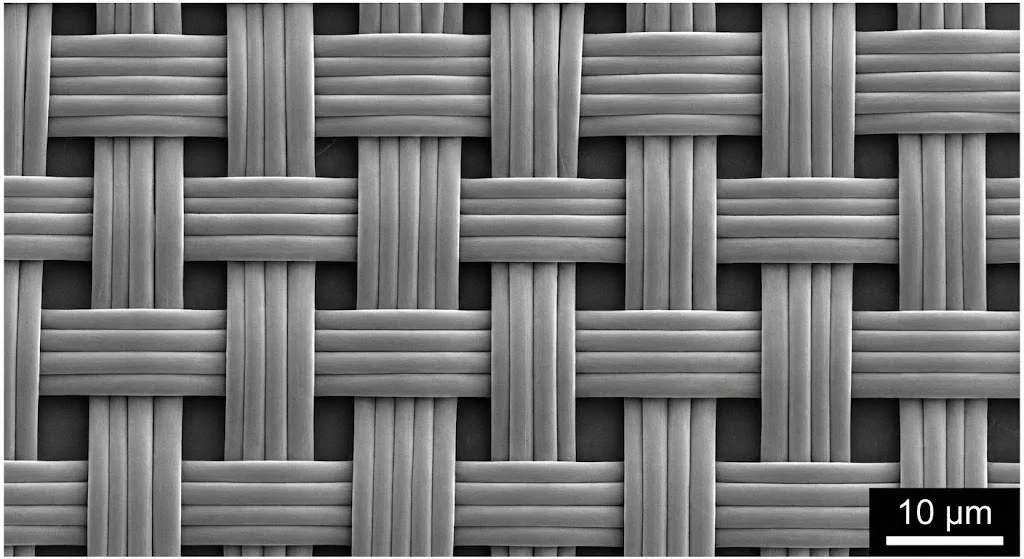
FIG 2.0: SEM VIEW — CROSS-LINKED ARAMID LATTICE AT 10,000×
Standard paper contains approximately 5% moisture. In the 10−6 Torr vacuum of the Plasma Press Codex, that moisture boils instantly, destroying the sheet. Cellulose fibers tear at the web tensions required for 60 m/s transport. Paper is incompatible with vacuum photonic manufacturing at every level.[2]
Polymer-V is the replacement: a 100% anhydrous synthetic aramid lattice — zero water, zero outgassing, zero organic decomposition in hard vacuum. It is a 4-ply co-extrusion: a 2 μm nano-ceramic matte surface engineered to simulate the feel of bond paper; a 10 μm precursor matrix that undergoes instant carbonization under femtosecond laser pulses; a 5 μm vacuum-deposited silica aerogel thermal break; and an 80 μm cross-linked aramid core providing 2,800 MPa tensile strength for 60 m/s transport.[3]
Substrate-X Chroma is the full-color evolution. Four species of leuco-dye nanocrystals — photochromic molecules locked in their colorless state until activated by a specific laser wavelength. Cyan at 405 nm, magenta at 520 nm, yellow at 638 nm, black at 1064 nm. The color is permanent — structurally locked nanocrystals that do not fade, bleed, or smudge.[4]
Substrate-X Dual-Cure adds format switching. A low UV dose leaves the polymer flexible (Mode P — paperback pages). A high UV dose cross-links the same polymer to rigid structural board (Mode H — hardback covers). Software decides the format per sheet at runtime. One spool produces paperback or hardback.[5]